Corrosion Mitigation
Section 1: Three Types of Specifications.
Different ways to look at ROI.
Approved Product Lists
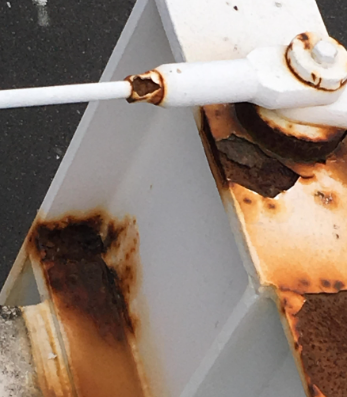
Approved Products List
A Qualified Products List (QPL) for coating systems is an approved list of coating products or full coating systems that have been tested, verified, and accepted by an authority for use in specific service environments.
Performance Based Specifications
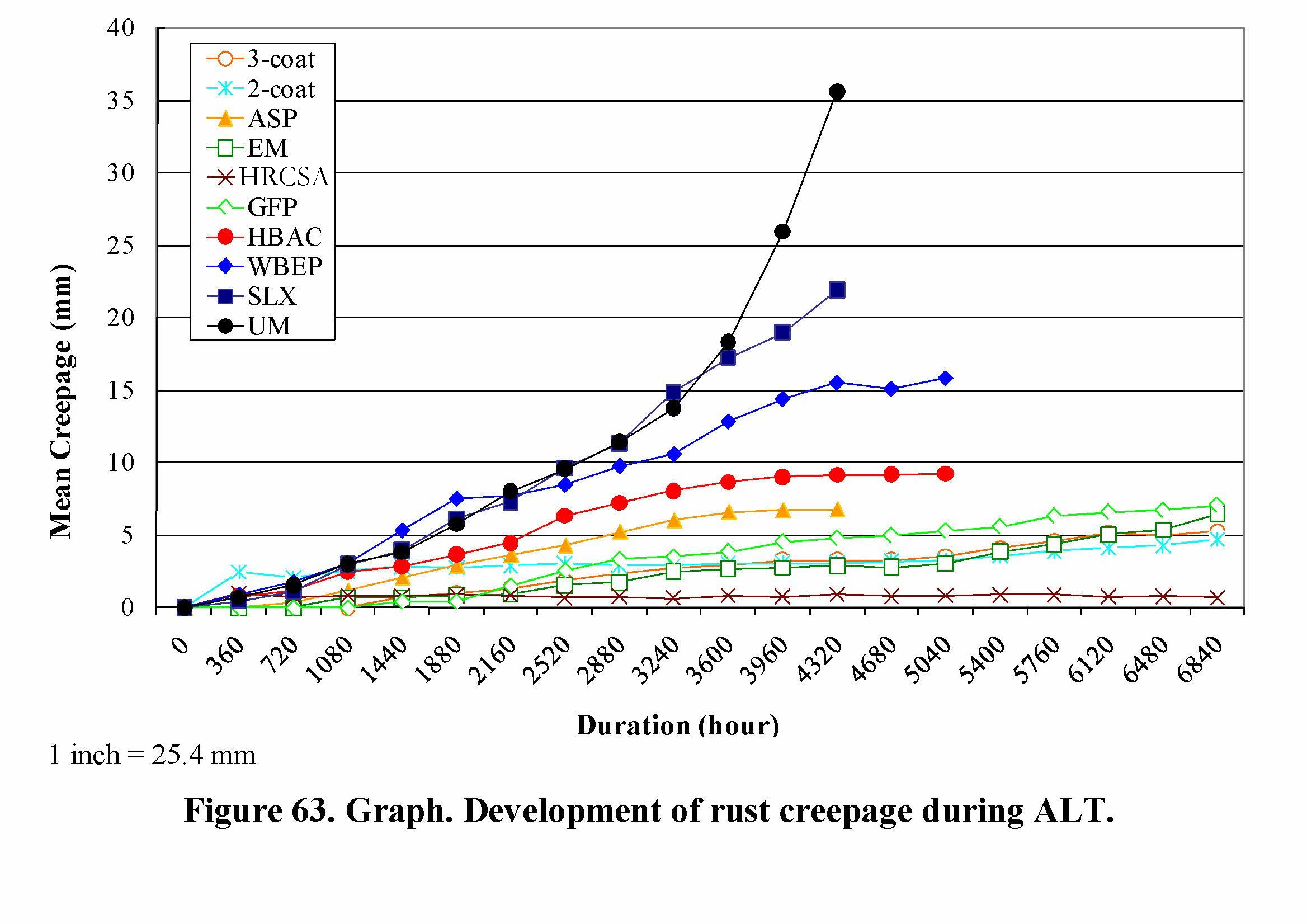
Performance Based Specifications
A performance‑based specification is a requirements document that defines what the coating system must achieve in measurable, verifiable terms—without dictating how to achieve it. It focuses on outcomes, not prescribed methods, which gives designers and contractors freedom to innovate while still meeting strict performance targets.
Examples: Case studies, lab tests, referrals, hazmat, equipment, others
Solution Based Specifications

Solution Based Specifications
A solutions‑based specification is a requirements document that defines the coating or corrosion problem to be solved and the functional outcomes needed, while allowing the supplier or contractor to propose a complete, integrated solution—not just a product or performance metric.
Examples:
Long term solution for structure critical corrosion mitigation.
Reduced surface preparation requirements without compromising long term performance.
Lower impact on traffic disruptions.
Shorter access time requirements.
Joint corrosion warranty supplier & contractor.
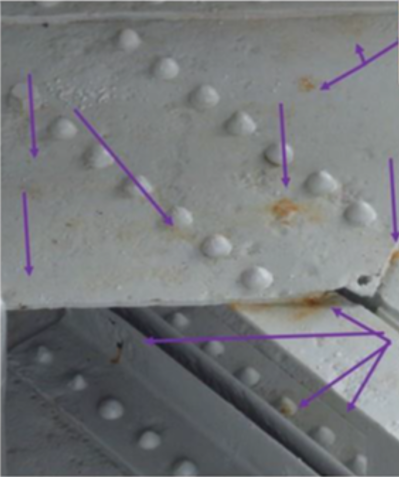
Salts Under Coating
HRCSA requires a clean, tightly adhered, salt-free substrate for it's application.
This photo represents a contaminated substrate at time of application. Because all liquid applied coatings are moisture vapor permeable, corrosion continues to manifest beneath the newly applied coating.
Corrosion Mitigation
Section 2: HRCSA Application Mishaps
Avoid application mistakes others have experienced.
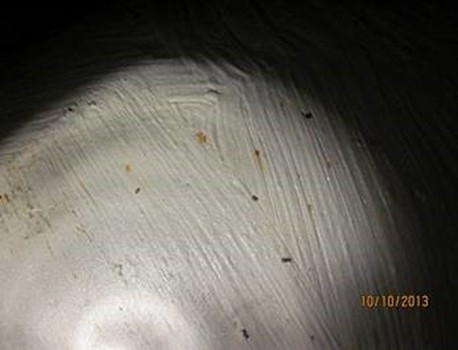
Condensation Under Coating
HRCSA was applied onto a cold, damp environment on an LNG pipe inside a humid LNG hut where humidity hovers around ~ 95%.
After pressure washing, substrate was blown dried with dry, clean, compressed air, wiped with TRT01 solvent soaked rag, blown dry and immediately coated with HRCSA before condensatio could form. The rend result is rather impressive. Only minor bleed through occured.
HRCSA displaces moisture, scavenges oxygen, neutralizes acids on the steel substrate.
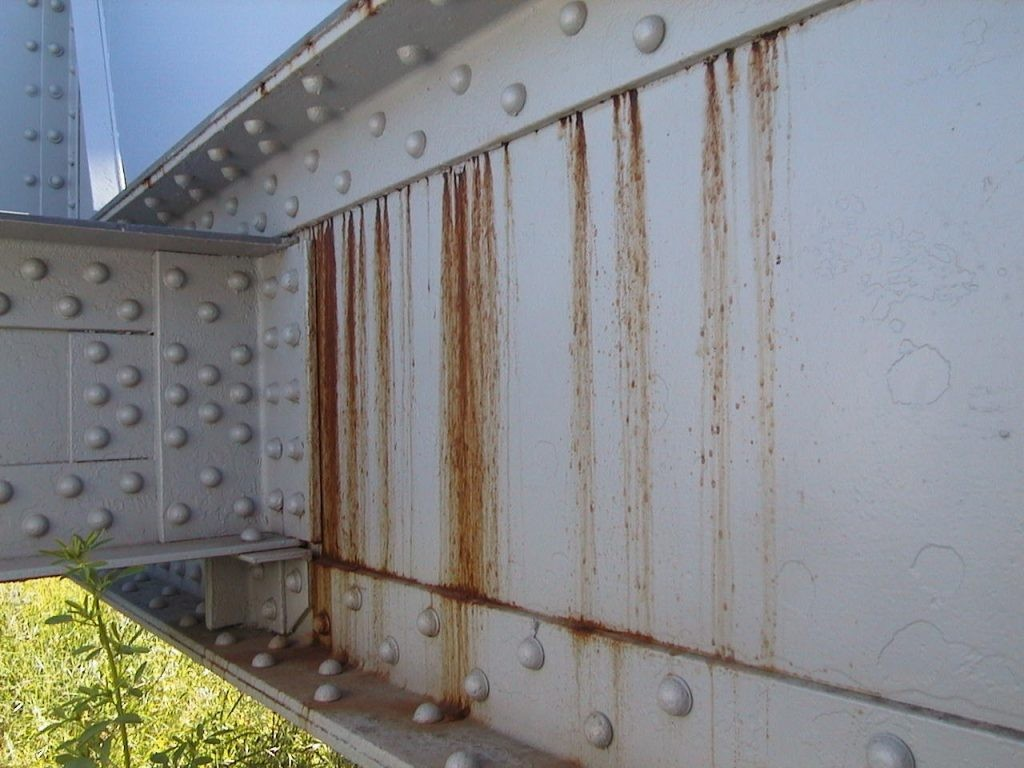
Water Inside Connection During Application
This application was very well performed with one minor exception: The insides of the connections had not been blown dried before applying HRCSA penetrant under pressure inside the connection.
The end result is that during curing, the moisture that remained had been pushed out by the chemistry resulting in the stains we see above.
The solution is simple: Wipe the stained areas with a TRT01 solvent soaked rag to remove the stains. In any areas where a corrosion hotspot persists, buff off the existing coating and apply a fresh coat onto the solvent activated buffed area.
HRCSA Penetrant Drools
After flushing out pack rust with soluble salt remover, and blowing the water out of the capillary channels with dry, clean, air, HRCSA penetrant is pressure applied into the capillary channels till refusal. After allowing the penetrant to sit for 5 minutes, do brush out the excess before applying HRCSA topcoat overtop.
Best practice is to brush the applied topcoat into the freshly applied penetrant to accelerate the mixing of the two chemistries (a meld coat). This practice prevents topcoat slippage on vertical flat surfaces that had not been properly brushed out.
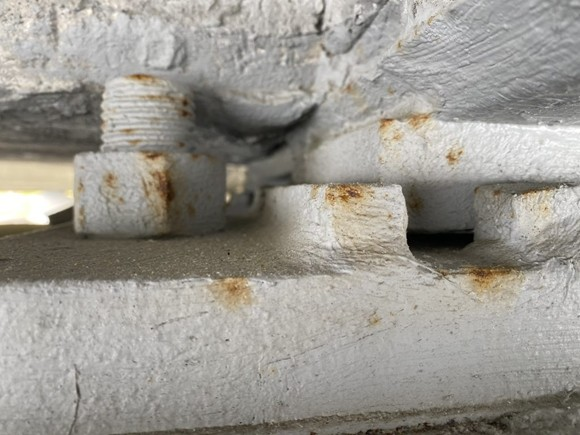
HRCSA Applied Under Specification
HRCSA is a chemically active coating with needs adequate amount of chemistry (thickness) in order to chemically neutralize the steel substrate.
In this case, close inspection clearly reviews that the amount is way under specification for the coating to perform it's duty.
Fasteners and sharp corners should have received a stripe coat. All other bare steel areas an additiona 10-12 mls DFT of HRCSA self-priming topcoat.
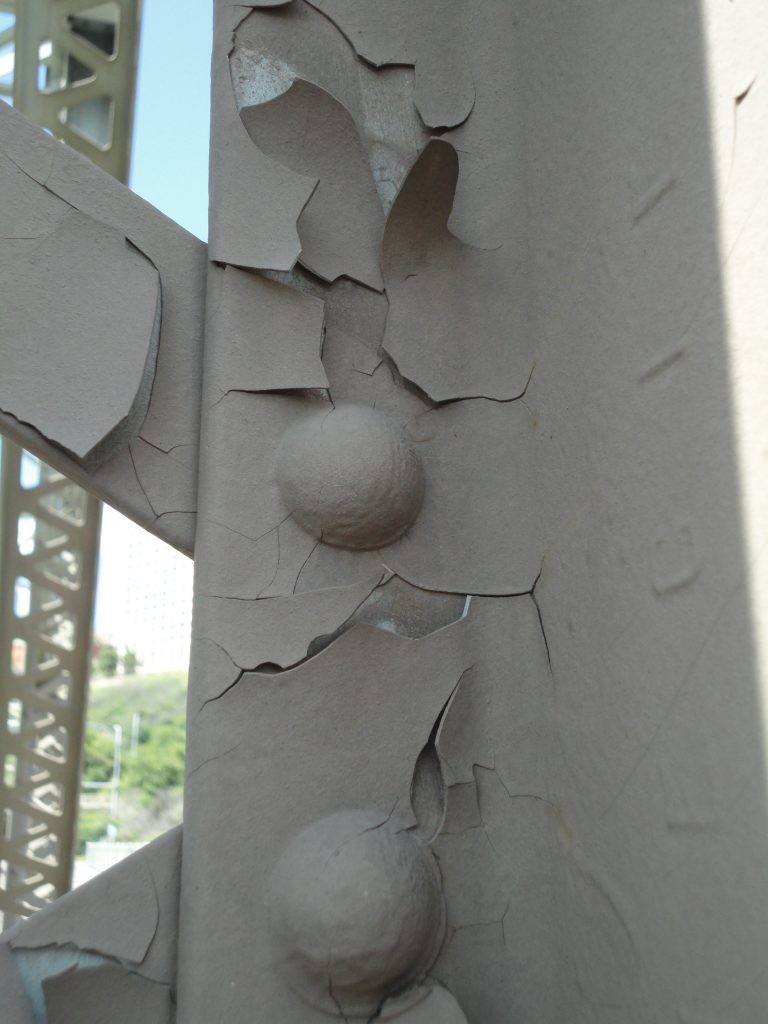
HRCSA applied over specification.
Fasteners and sharp corners receive a stripe coat.
Bare steel areas an additiona 10-12 mls DFT of HRCSA self-priming topcoat.
Overcoated areas 5-7 mls DFT.
Because HRCSA is so thixotropic, applicators can apply over 30mls before the coating begins to sag.
In this photo, the DFT was measured to be 30mls thick. HRCSA can break and peel when applied too thick.
EXCEPTION: HRCSA Penetrant treated connections require a heavy application HRCSA self-priming topcoat to be brushed in to mix the two chemistries to form a "caulk coat" The blending of these two chemistries converts the combined materials into an elastomeric seal which will not crack and peel.
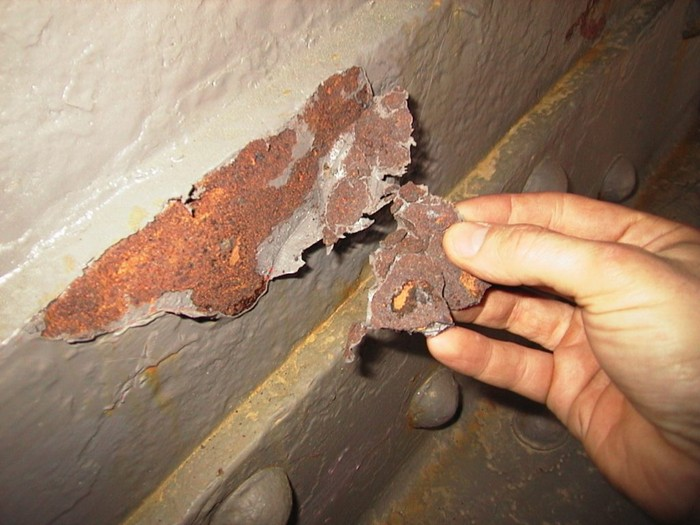
HRCSA applied over black oxides
Chemically active HRCSA chemistry, applied onto black oxide patches, will cause the black oxides to delaminate from the steel substrate.
Preservation engineers who understand this have had black oxide laden structures purposely pressure washed then coated with HRCSA the year before finalizing the project.
Areas where black oxides caused delatmination were buffered to bare steel, wiped with TRT01 solvent soaked rags than recoated with single coat, single component HRCSA self-priming topcoat to finish the project.
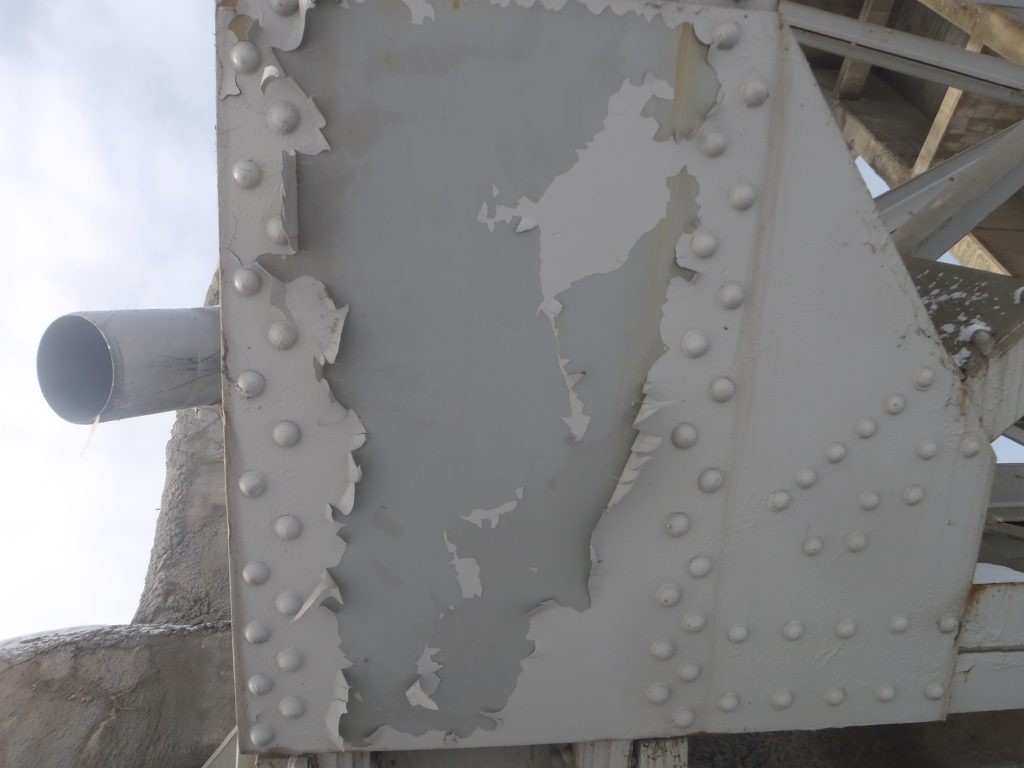
HRCSA Repair Gone Wrong
In this application mishap, the asset owner was not satisfied with the colour match.
The contractor overcoated the existing HRCSA application preparing the existing substrate. The end result? HRCSA bi-layer formed because the dirty substrate coating prevented the 2nd layer of HRCSA from bonding with the substrate.
When overcoating an already cured HRCSA application, the existing substrate must be first pressure washed with salt remover, dried, then solvent wiped with TRT01 to reactivate the inplace coating before applying a 2nd HRCSA coating overtop.

Stainless steel must be aged.
Do not apply HRCSA topcoat to non-aged stainless steel substrate.
Surface preparation on non-aged stainless steel can be oxidized using heat, scuffing with steel wool or sandpaper, chemically treated with acids or vinegar, etc.
The risk to applying HRCSA to new stainless steel is that it could slide off on vertical slopes before the coating's excess sulfonate and calcite platelets had the chance to set their pattern.
Corrosion Mitigation
Section 3: HRCSA Application Advisements
Applications which could come back to haunt your project.

HRCSA Is Chemically Active
We do not recommended HRCSA self-priming topcoat be applied to high-traffic areas like handrails, steel walkways, steel stairs or whevever a lot of abrasion takes place.
HRCSA is OK on neoprene flanges, but will affect the chemistry of non-solvent resistant flanges.