Wire Rope
Exterior and Between Strand Protection
HRCSA Self-Priming topcoat protects from the elements on the outside just as HRCSA Penetrant protects wire rope in between strands.
Wire rope corrosion - Core Drivers.
MOISTURE RETENTION via capillary action inside the rope. || SALT - chloride-driven pitting that bypasses protective films. CHEMICAL EXPOSURE: acids, vapors, washdowns degrade steel and lubricants. || ABRASIVE INTRUSION: grit enters strand valleys, breaking coatings and accelerating oxidation || GALVANIC INTERACTIONS:between dissimilar metals → localized attack
HRCSA has a 30+ year field proven solution for countering this drivers.
The 3 Ways HRCSA is used to protect wire rope.
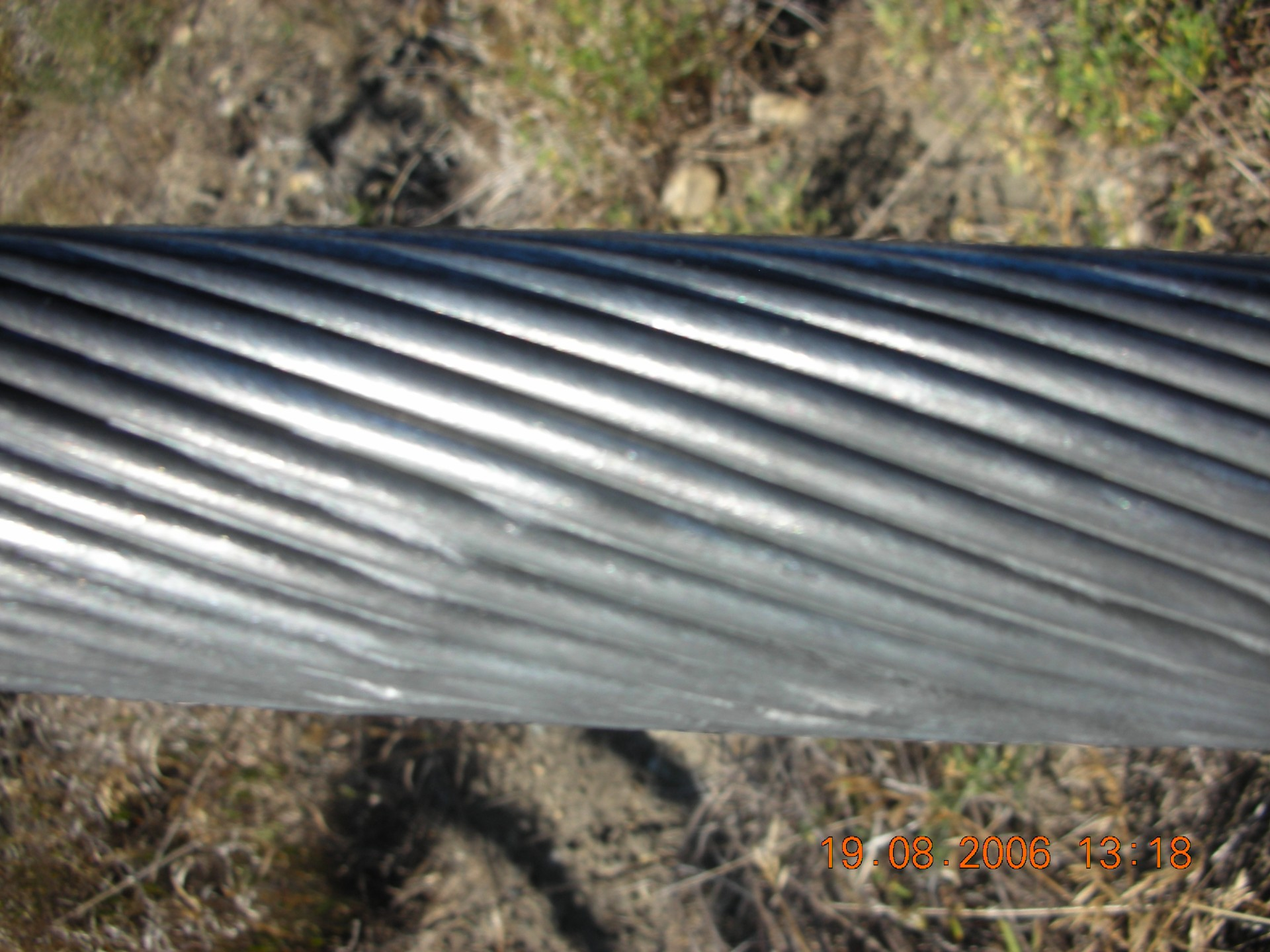
Paint Mitt Application.
A close look at 2mls applied thickness of HRCSA self-priming topcoat application after 11 years in service reveals how the elastomeric coating seal opening between strands. Specifications now call for 4mls thickness for a 20+ year service lifecycle.
Surface preparation was achieved using wire brush wheel on right angle sander.
Protection Goal: Outer barrier protection.
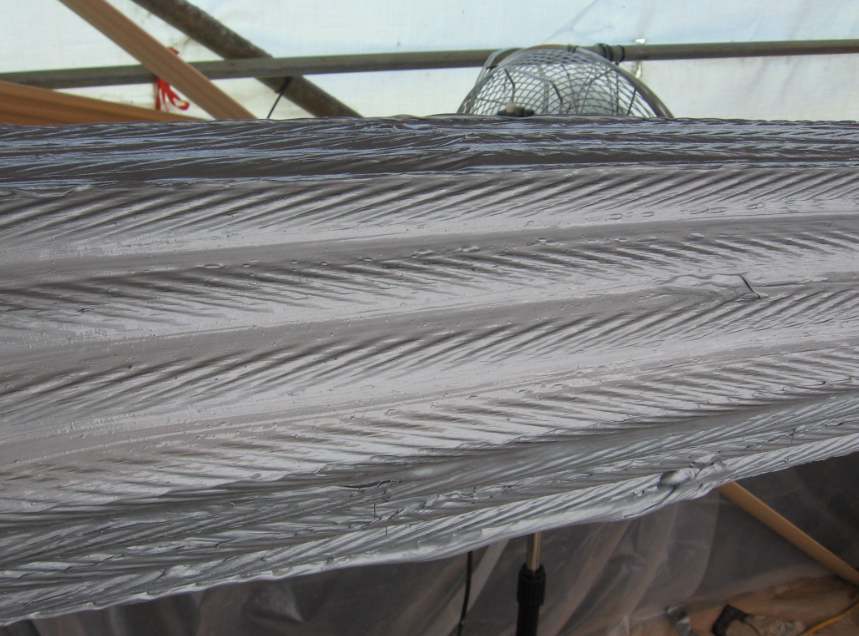
Wire Rope Bundle
A thicker HRCSA topcoat is available for multiple wire rope stands. Designed for being wrapped afterward.
Protection Goal: The more HRCSA material applied, the greater the amount of sulfonate materials become available for creation of cation layer inside the wire rope bundle and between ropes and strands.
Importantly, the elastomeric nature of HRCSA topcoats serves as a rubber seal that provdes chemically active as well as flexible barrier protection deep inside the wire rope core of the bundle.
Finally, the non-conductive nature of HRCSA coating impedes electron flow (surface current) activity on the wire rope surface. HRCSA is non-conductive up to 27 kva.
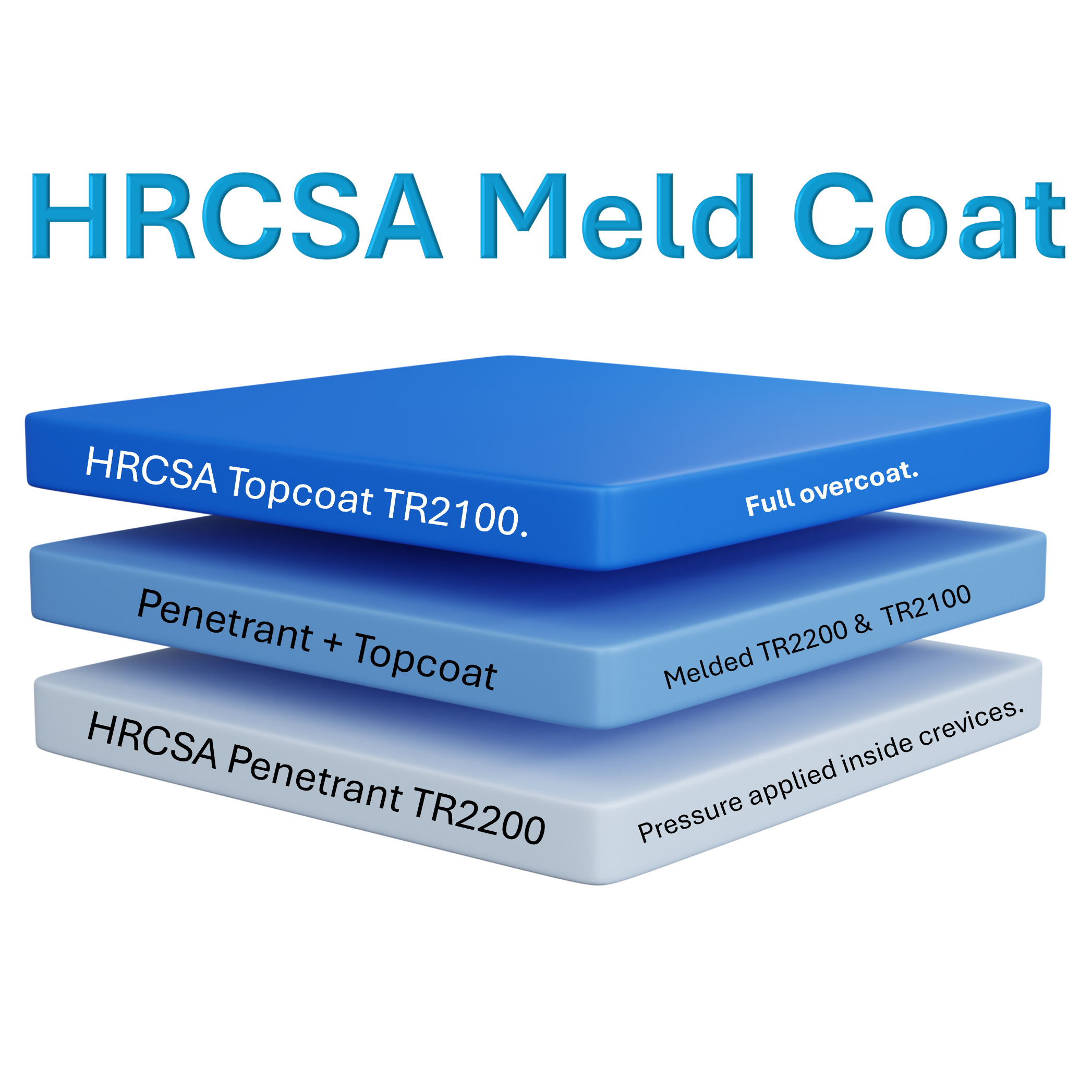
Active Penetration Combo
On guy rope cables, a dual HRCSA application provides the longest term corrosion protection. After wire brush cleaning, chemically active HRCSA penetrant is pressure applied in between strands then then meld coated with an HRCSA topcoat application using a paint mitt.
This combination increases the % volume sulfonate material applied to the guy rope from ~7-9% up to 13-15% volume sulfonate material inside the wires. Suficient active sulfonate is in place to gradually produce a mono-molecular layer of cations on the inner layers of the wire strands.
Covered with with chemically compatible HRCSA self-priming topcoat and both inside and outside of the guy rope is protected from the elements.
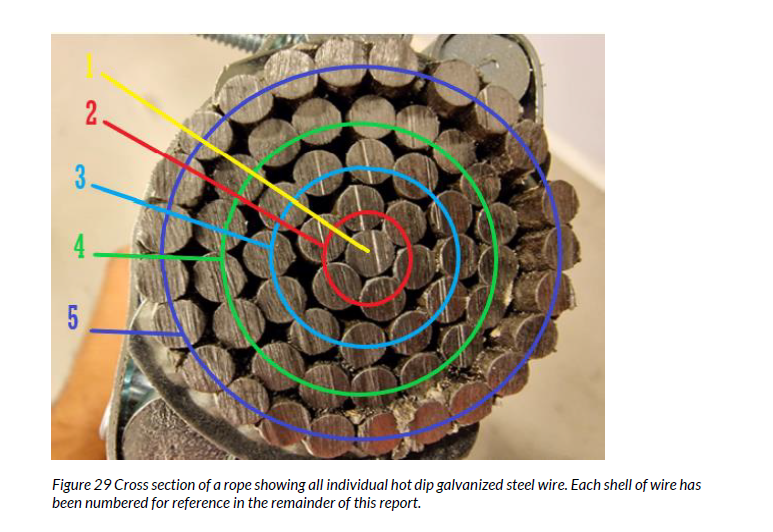
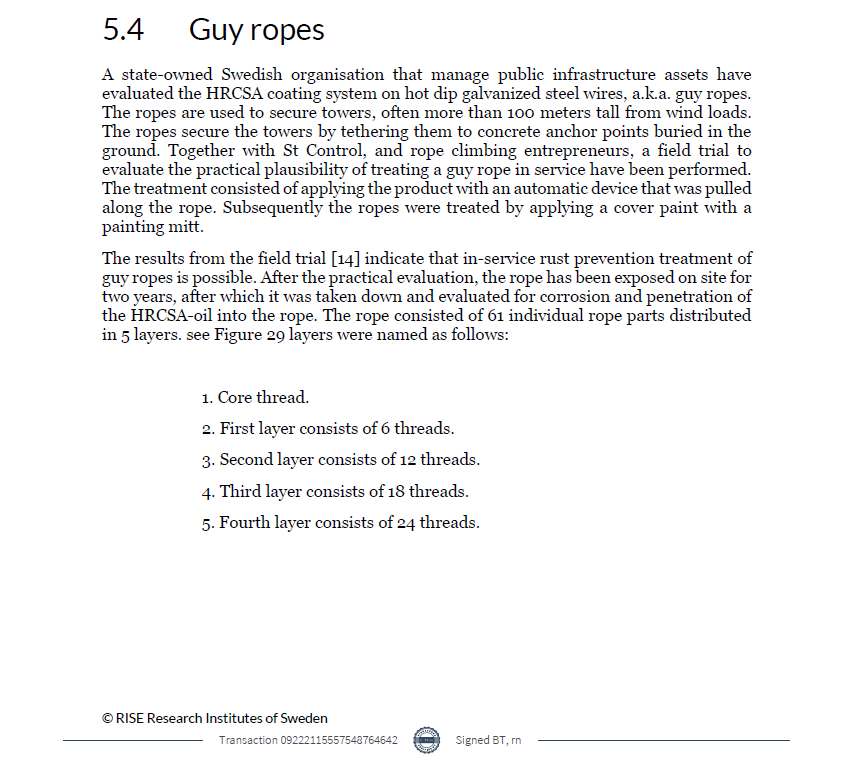
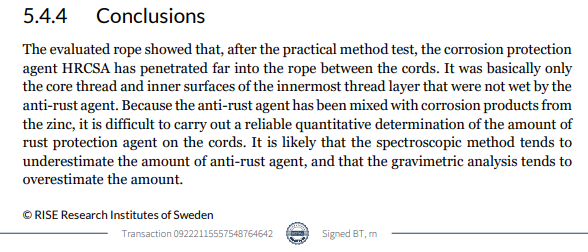
2 Year HRCSA Field Test on Guy Rope
An Objective Analysis
When it comes to validation, our Swedish colleagues have challenged HRCSA in multiple field trials to confirm that HRCSA can "Walk the talk." Bjorn Tidbeck's Linkedin is included below for an objective 3rd party Q&A on HRCSA performance on Guy Rope.